
Gothenburg and its no-go areas
And why you should absolutely go there.
In Germany moving to Sweden is considered a dream for many. There is a highly idealized image of the country, caused by the “Bullerbü-syndrome”. It describes the desire for nature and undisrupted culture, as portrayed in the famous Astrid Lindgren books. While I also grew up on Lindgren’s novels, I grew more and more skeptical about the picture of this beautiful, perfectly social and economically thriving country to the north.
Before moving to Gothenburg in August 2025, I researched the city and its surroundings a lot, to make sure to find an apartment in a nice area. This is the time people moving from abroad usually stumble over a big stack of articles and posts about crime, gangs and the areas considered Utsatta områden (dangerous neighborhoods) or Särskilt utsatta områden (extremely dangerous neighborhoods). This tag is given publicly to certain neighborhoods by the Swedish police, so it has to be something you should trust, right?
Well.
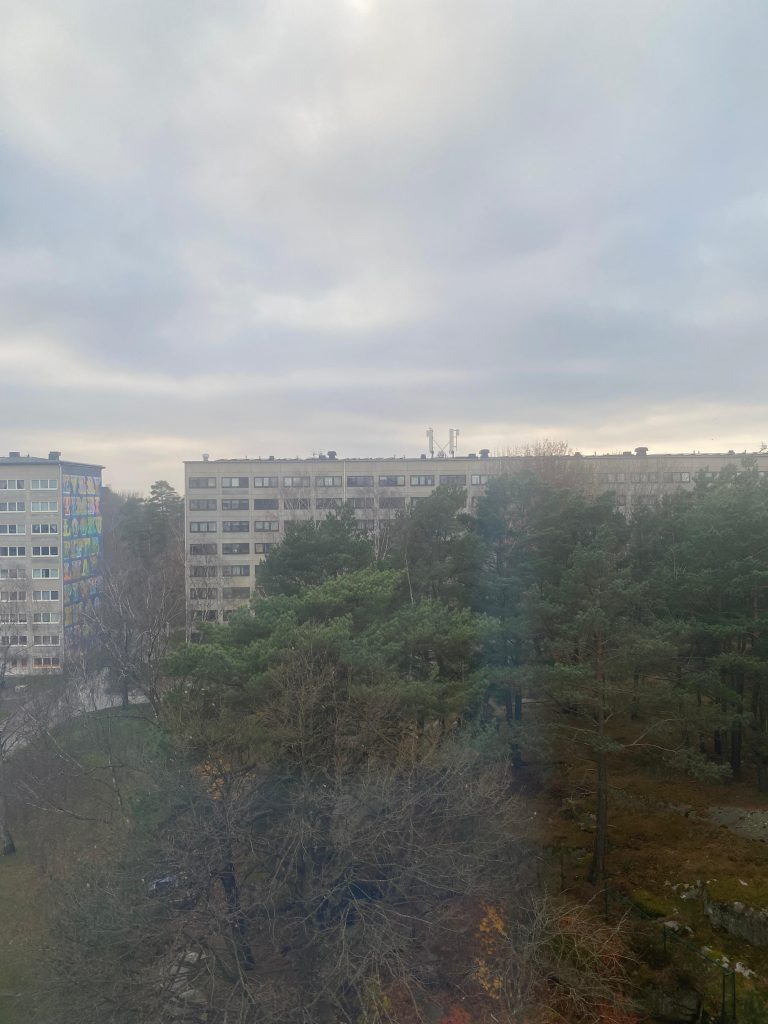
To get this out of the way first: yes, there is gang activity in the big cities in Sweden. According to Reuters, in 2022, there was a peak in gun violence recorded, with 390 recorded shootings throughout the year. While this number has halved in 2025, it is still higher than the average in the European Union. The conservative right ruling party took these numbers as inspiration to introduce a higher police presence, especially in the so-called dangerous areas, and a stricter immigration policy.
While all of that is of course true and reliable statistics, you can still frame these in certain ways. One thing to point out is, that while deaths by gun violence are higher than the European average, the total number of homicides is not considerably higher, in a global context Sweden is of course still considered very safe. It is also true that cases of gun violence are often directly associated with gangs in Sweden, while the police does not have, or at least does not publish, statistics in which gang-related homicides are categorized. In 2025, there were 43 victims, with eleven of them coming from the terrible massacre in Örebro in February, where mostly people of non-swedish background have been killed and which was not connected to gangs, but rather a racist motive. In many other cases, connection to gangs is assumed, but not provable.
Framing neighborhoods as dangerous is of course only the tip of the iceberg. These areas, often situated outside of the city centre, mainly on Hisingen, are neighborhoods with a high percentage of inhabitants with immigration backgrounds and in a weaker economic bracket, than the average in Gothenburg. Many are also built during the million-project. I had the pleasure of working in two of these areas through a course at Chalmers Technical University, which gave me a very clear view on the actual situation.
Hjällbo and Hammarkullen are situated in the North of Gothenburg, both feel quite disconnected, as you go through industry and forest before reaching the first of the two: Hjällbo. The plan once was to have Gothenburg naturally spread towards these areas, so they would automatically be connected to the city centre. While Hjällbo feels quite disconnected, the tram takes you into the city centre in a little over a quarter of an hour. It is home to close to 9000 inhabitants, with plans being in place to expand this number. New construction in place of the local school is planned to begin next year and finish by 2035. Speaking to the people living and working in Hjällbo, you quickly get a picture of how it is to live here; nearly everyone loves it. With Hjällbo being a bit disconnected, it led to the formation of a quite strong community. There is a lot of initiative and organisations today, as I heard even more in the past, that offer workshops and get-togethers. On the main square, there is a newly renovated library, a community centre and the youth centre Hemmaplan, all great institutions. Save the Children is offering sports and other activities to younger kids, while Hemmaplan is the place to go for youths 13-18 years old.
When speaking to parents in the area, there is a lot of fear for their children being recruited by the local gangs. Interestingly enough the answer to the question how to fight this problem is never the police. There are tons of experiences of racial profiling, intimidation and mistrust towards the police. Them openly tagging Hjällbo as a “no-go-area” (the Swedish police does not use this term, but I will) does not help in this context.
The solution a majority of the people would like to see is more offerings for the community, but especially the youth. When people say “joining a gang is a choice” you have to ask about the choices available. We spoke to young adults stating they were meeting at the public playground at night to hang out, not because they like it there, but because there is simply nowhere else to go. People in economically weaker areas are often living on fewer square meters, so meeting at someone’s home is usually not possible, the youth centre only opens twice a week with an age limit of 18, the library is new and already overwhelmed with the number of school kids going there every afternoon. Save the Children is offering great activities to school children, but the solving these problems should not be put on an NGO. ABC is an organisation by the Arabic community offering workshops and a café, which could host a lot more, but are not given the spaces for it.
This is where architecture and urban planning comes in. It is terribly obvious what Hjällbo would need. Communal spaces with a sense of public ownership and closer cooperation with the municipality, to rebuild the lost trust. In our university project, we proposed a closer network of the existing places and organisations, a remodel of the city-owned community centre called “Kärnan”, which could host community-organized workshops and a new drop-in social space targeting young adults. While I of course hope that this project will go forward, this can not be the end point. Hjällbo should not become another “project”, work on areas like this should be done with a change in mindset. You can look at statistics, at articles and at reports all you want, you will only truly understand a neighborhood when you go there. The stigmatization has to stop, the community has to be included into the projects and work has to be done to give people more opportunities. Asking inhabitants what they think the problems are should always have more weight, than someone looking at it from the outside.
The project we worked on in a few months as a group of four students should be a sign of how easy it is to improve neighborhoods. We did not work on a one-fix-all solution, because that is not how our urban spaces work. They are highly individual and complex. While sending in more police might (many studies show that more police does not automatically result in lower crime rates) improve statistics, it will not improve the quality of life in the area.
To conclude, we as planners need to be a moderator between municipal stakeholders and the affected communities, we are not just the designers of houses anymore. We should offer positive alternatives to the one-fix-all solution called police and offer interventions that give opportunities and voices to the people that are mislabeled and unheard.
Written and Published by Joshua David Hahn, 2026