
Planning against homelessness
Urban Planning for the overlooked society
Homelessness is one of the most significant problems societies world wide struggle with. Even in the richest countries on earth you will see people living on the streets every day, with them becoming more and more common. The Institute of Global Homelessness estimates the number of people without any form of shelter to be around 330 Million, while 1.6 to 3 billion people are living in insufficient housing, namely unregistered housing and slums. That is a third of the world’s population. So how come that homelessness seems to be a topic that is kept out of architectural discourse? And what is it we can do to change something?
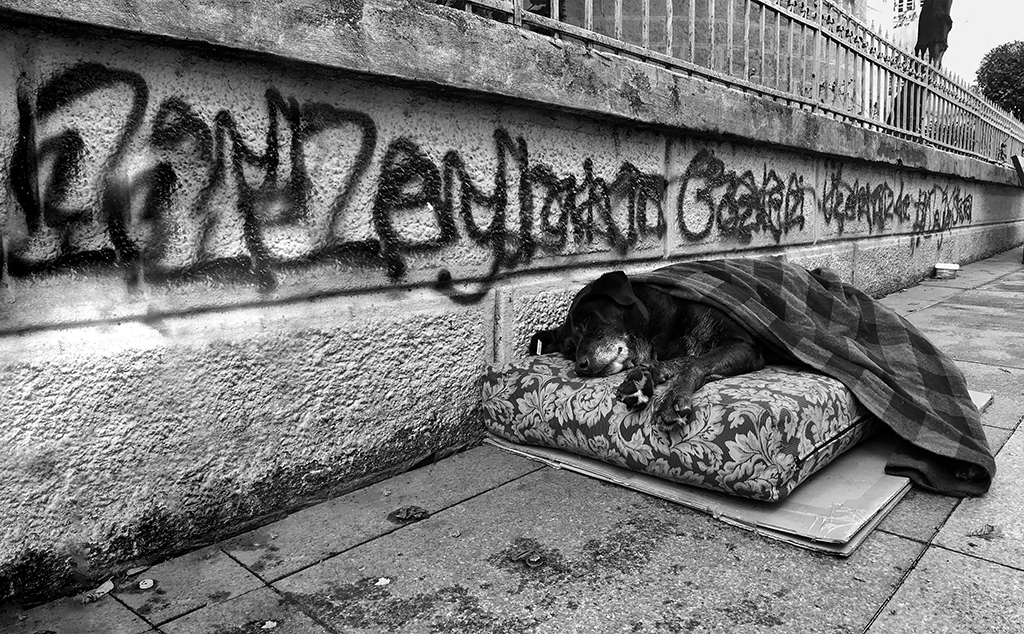
Urban planning and responsibility
As architects and urban planners, we hold a lot of power. In designing the spaces of tomorrow, we shape future society and decide who gets to take part. Ideally, a good, considering architects will plan cities that welcome everyone, benefit everyone and ultimately be inclusive. As we see globally, this is not and has not been the case. While big urban planning projects are sold as transformative and sustainable, one has to look behind that facade. Gentrification and displacement are not the topic of this article, but they certainly influence processes that lead to more homelessness. Raising rents will ultimately result in a rental market that is only affordable to high earners. We saw the rents skyrocket through the privatization of housing in Germany, which many would now consider a mistake. Sweden is doing the exact same thing today.
My main question is: Where are the urban planning proposals that do not shy away from the topic?
Stigma, illegal and now?
Being homeless is considered THE sign for being a failed human being. While this seems to be the common view in society, I would make the argument that homelessness should not even be able to exist in wealthy countries like Sweden or Germany. I personally see people having to live on the street as a very clear indicator for a failing system. My opinion is that not people ending up in these precarious situations are the failing ones, but we as a society are.
People without shelter are looked down upon and are even victims of hate crime. The national coalition for homelessness in the United States recorded 97 hate crimes against a homeless person between 2020 and 2022, with 47 of them ending in the victim losing their lives. These hate crimes are, as the coalition for homelessness states, fueled by the criminalization of homelessness. This includes sleeping on benches or in your car, sitting in particular public spaces or begging. Sweden proposed a national begging ban in 2024, which thankfully was not implemented. Local bans are in place in a lot of areas though, which shows the intent to, as the Guardian puts it, “outlaw poverty”. One of the biggest problems people run into is the lack of sanitation and access to clean water. Toilets usually are not free to use, with public showers even being uncommon completely. Movements to implement more of these sanitary facilities in city centres have been pushed down through different arguments. Some one hears a lot are the fear of making homelessness too comfortable or the misuse of such facilities. I personally question if those arguments have any kind of basis, as they do not seem to consider any form of consequence. In current times, complex problems are often met with simple answers by politicians, so simple in fact that they disregard any following implications the answers might include. If there is no possibility of sanitation in a public free bathroom, people will find other ways to relieve themselves. This might be using the bathrooms of Cafés and restaurants. In most big cities in Europe, those will not allow non-paying customers to use their bathroom, so there is simply nowhere else to go, but outside, which of course is criminalized. We will not solve the problem of homelessness by forbidding it away. People exist. And they are to be recognized as equals in the urban space.
Not a part of architecture
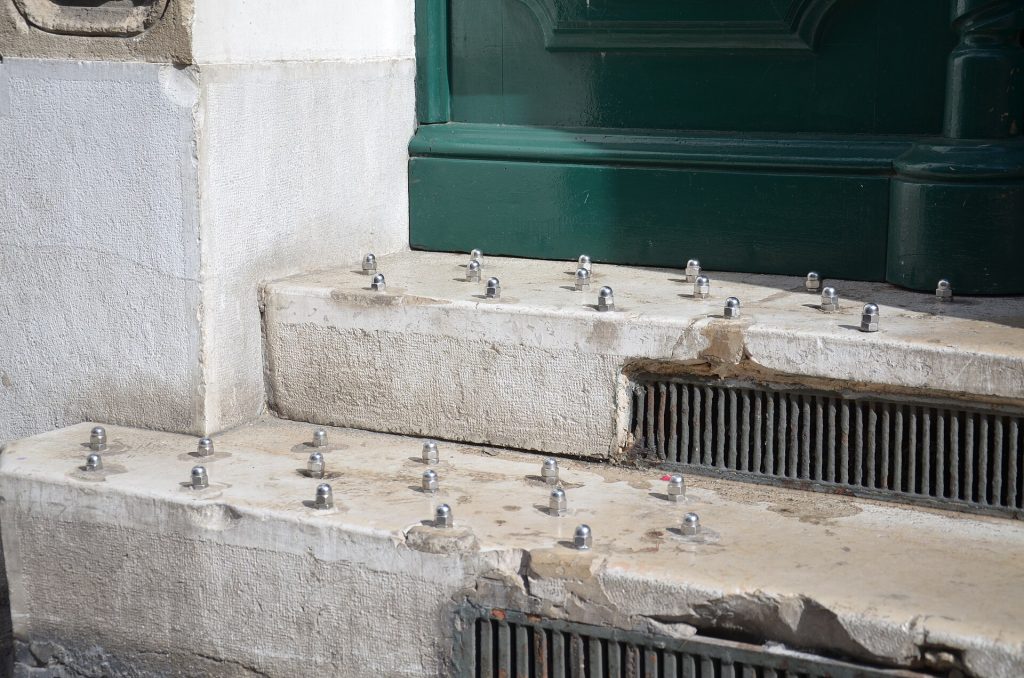
The term “Defensive Architecture” is now quite well known inside and outside of the architecture space. It describes design decisions which will not allow people to stay in certain spaces or prohibit them to use them in a certain way. Examples include benches with armrests between every seating place to prohibit sleeping on them, spikes on the metro system’s warm air exhausts in New York or even acoustical defense mechanisms with high pitched sounds. The latter is not used against the homeless per se, but against young people, who are able to recognize sounds in that pitch. While these measures are more and more implemented in the big cities, I am struggling to even call this a part of architecture. My definition of the field in its core is inclusive, so defense mechanisms against certain humans are not part of that idea at all. Even further elaborating on the topic would feel wrong. I just want to call on anyone having implemented defensive “architecture” into their designs in the past and ask you to really reconsider if that is the kind of impact your work should have on the urban space.
Where do we go from here?
The answer to this question is simple, the actual implementation of solutions quite complex. The times we live in call for strong voices defending and promoting our transformation into an inclusive society. That inclusion has to truly include everyone, you could even argue that the inclusion of only humans being far too narrow, rather than trying to forbid certain parts of the reality of society away. A homeless person is not a sign for a single failed entity, it shows a deeply unjust system in countries where homelessness should not even be a topic. Planners finally have to include this part of society into their planning and make sure that the homeless get the same amount of care and an extra amount of unlocked opportunity.
Written and Published by Joshua David Hahn, 2026