
Where is the inspiration?
Where is the latest shit?
Where is it?
Where is it happening?
Where is the merger?
Where is fashion?
Where is music?
Where is architecture?
I am seeing a few prints, a few posters, but that can’t be it.
Bauhaus, are you kidding me? They will be 100 years old next year.
This can not spark enjoyment for me anymore, we have to go on.
Where are the magazines?
Where is the inspiration?
Where is augmented reality? Where is all of it?
Where is the oculus rift headset?
That’s all such a comfort zone.
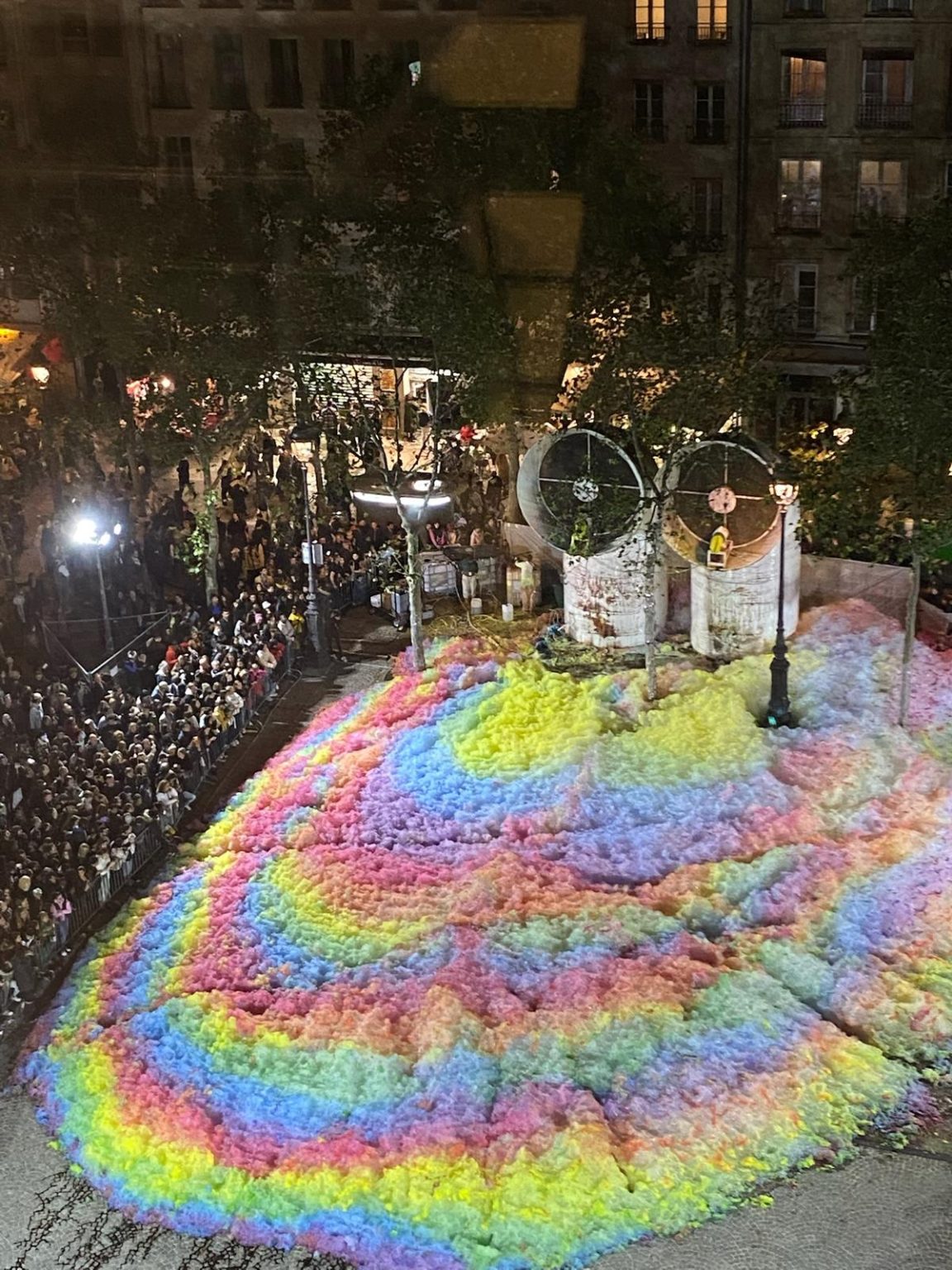
This passionate quote comes from the german designer and art director Mike Meiré. He said it on German television in 2017 and it is still very relevant. It became a meme in Germany over the years, with Meiré being considered somewhat of an eccentric. But aren’t all designers (including architects)?
While his rant has comedic value it also includes a lot of very important questions, some of which I have been carrying with me since very early in my architectural education. Being brought up in a small town in Germany, I was confronted with the typical German residential area; White plastered and cheap red brick houses, huge volumes on far to small plots, big windows only for the ones that had money left, cheap insulation, plastic window frames, low-cost facade systems and cheap roofing. In my mind, this could not be the standard of home that everyone settled for. I personally was very lucky to be brought up in a comparatively small wood-construction rowhouse with a small footprint, big windows with wooden frames, a rainwater tank and solar panels on the roof. Considering it was built in 2003, it was quite focused on sustainable living, it might also have inspired me in a sense. So how come that there were forward thinking houses built in 2003, but now it seems like the newly built housing standard seems so uninspiring?
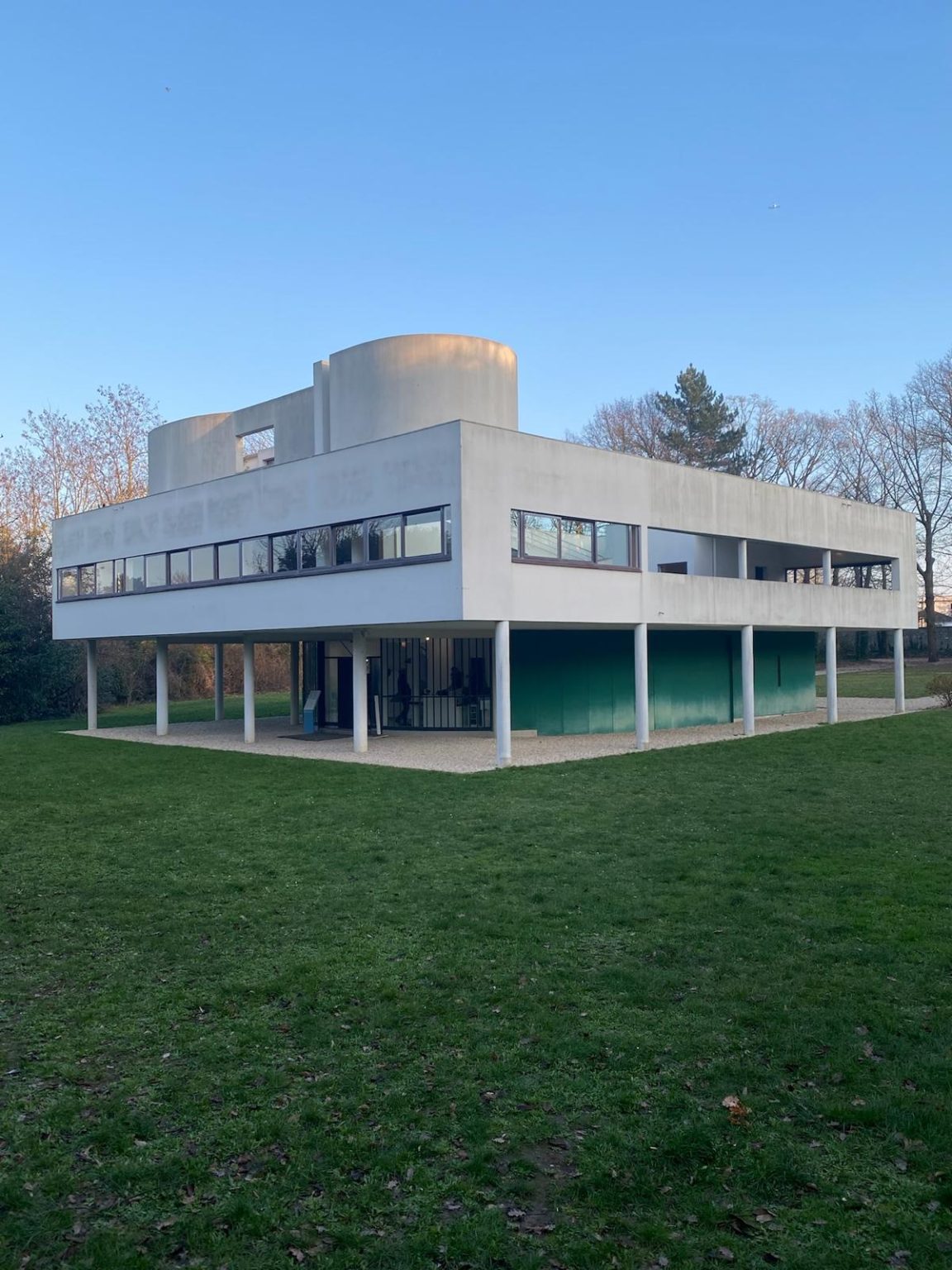
One reason might be the boom of prefabricated houses. 26 percent of newly built single family homes were prefabricated in Germany, with that number rising rapidly. With building costs for traditionally built houses exploding, prefabricated houses enable a lot of people to build their own home, who would otherwise not be able to financially. That fact is of course positive and something I am not arguing against at all. On the other hand this leads to a very monotone building culture, as you can see in the mentioned neighborhoods. These houses are simple, they rely on trusted floorplans and a minimum of inspiring new ideas. Most of them use thermal insulation composite systems for the facades, as it is the cheapest way to reach the incredibly high standard in insulation required by German building laws. From a standpoint of ecological sustainability alone these systems are to be critically looked at, as a glued composite with often the cheapest Styrofoam insulation will not be recyclable at all, with it becoming specifically challenging waste to deal with. There is also a problem with algae, which is something you can see on many of the white facades as a blackish hue. There is also no material identity or feel whatsoever. The walls are all fabricated in a way that you would not be able to guess what the structural material actually is. It is something that most home owners probably do not think about, but that is not the point. We live in times that call for transformation, for new ideas. Not by choice, but by the simple need of changing our building culture towards a sustainable future. When you look at other times in human history, there were quite radical ideas how the building culture should be reformed over and over again. The modernist movement is one that echoes even into design decisions taken today, for good or for worse. And while you can find quite harsh flaws in the modernist ideas (and the men that thought of them) they proposed a radical change away from the status quo, with some very important ideas being very relevant today. While it is seen more and more critically I truly still see the worth of learning extensively about Le Corbusier and Walter Gropius, even though both are flawed in their own ways. Interestingly the Bauhaus is still thrown around by developers and firms offering prefabricated houses as a selling argument, mostly to say that their designs are white, uninspiring blocks. The functionalism, central idea of the modernist and Bauhaus-movement, on the other hand is not of interest at all. Form follows function clearly contradicts the “let’s cram as many square meters as we can”. The abundance of space is traded against good material and spatial quality and artistic value. Not having to think about how a wall is constructed, because it is predesigned in a catalogue might sound efficient, but it will also always give you the same result. What makes older houses so indescribably interesting is the details, the joints, the parts where you see how it works, where a roofbeam is not only a hidden part somewhere behind cheap plastic and gypsum, but gets to have a sculptural quality. You might think that this is only important to architecture professionals, but this is a central part of our job; making spaces feel inspiring, interesting and plain beautiful, without having to understand why it is so aesthetically pleasing. There are reasons though, why people on average will prefer the aesthetic of older houses rather than what is built today. I do not believe this is caused by stone decorations or metal door handles, it is the feeling of being in a space where a human actually decided that metal was the fitting door handle material for that exact context. A human-designed space.
Where is music, fashion and architecture?
I am neither an expert on the current state of fashion, nor do I think that I can comment on the level of inspiration the current music scene provides. Architecture on the other hand is in an interesting place. While the residential building is of course the building type most apparent to most people, the age of big architectural statements is also still ongoing. Most people will probably associate the word “Architecture” with the important landmarks: the Empire State building, Sydney opera house or Burj Khalifa, to name a few. This is only logical, it is the part of architecture that is spoken about in the newspapers and on TV. Bjarke Ingels revealing yet another Concert hall somewhere is certainly more exciting than talking about funghi-based building materials and the impacts of architecture on safety and justice in urban spaces, right? In my opinion it should not be. At least in Germany, the big statement architecture projects are seen in a very bad light, after the explosion of cost of the Elbphilarmony in Hamburg and the explosion of cost of the Berlin Airport and the explosion of cost of the Elbtower. You might see a pattern. I would even go so far in defending these projects to a certain degree, in that extraordinary buildings are very hard to calculate financially, I would just question if our current situation can sustain and afford these prestige projects. After the completion of the mentioned Elbphilarmony and Berlin castle in 2017 and 2020 respectively, Germany got a new wave of these projects in the past year. The new Operas in Hamburg by BIG and Düsseldorf by Snohetta, FOUR in Frankfurt by UN Studio, the Elbtower in Hamburg by David Chipperfield or the berlinmodern by Herzog de Meuron.These five projects combined will have an estimated cost of 4,5 to 5 billion euros, while in the very same cities there is rising homelessness, displacement caused by rent increases and schools in horrible shape. It is obvious that this all has a far bigger complexity than looking at where money is spent. It is still an interesting development in a country that apparently has to cut down its social state, while prestige projects like the Elbphilarmony have made a habit out of needing public money to save the project.
I am hoping that a new generation of architects will now rise, who value the worth of a building not by its prestige or by its luxurious appearance, but by its value to society. That includes venues to hold cultural events of course, but you might argue those might not need to be housed under (in renderings shown as unrealistically thin) concrete shells, when there is another landmark a few meters up the river.
Where will the inspiration come from?
So what does this all lead to? In my opinion the architectural landscape needs a shift. Away from a few inspiring prestige objects, away from spending huge amounts of money on statement pieces for the very few (because let’s be real, an opera targets a very narrow audience), towards truly transforming the urban landscape into a high quality space for everyone. We should give young designers chances to be the spearhead of that transformation and to introduce new ideas. Architecture needs to be something people value as what I think it can be: an art that bridges technological, social and ecological challenges. If society realizes the value of architecture, maybe we will regain the ability to be radically creative, outside of the hyper regulated and trimmed to efficiency processes that are going on in most offices. All in all, Architecture is the process of making space, but architecture itself needs a bit of space to flourish, to generate inspiration.
Written and Published by Joshua David Hahn, 2026